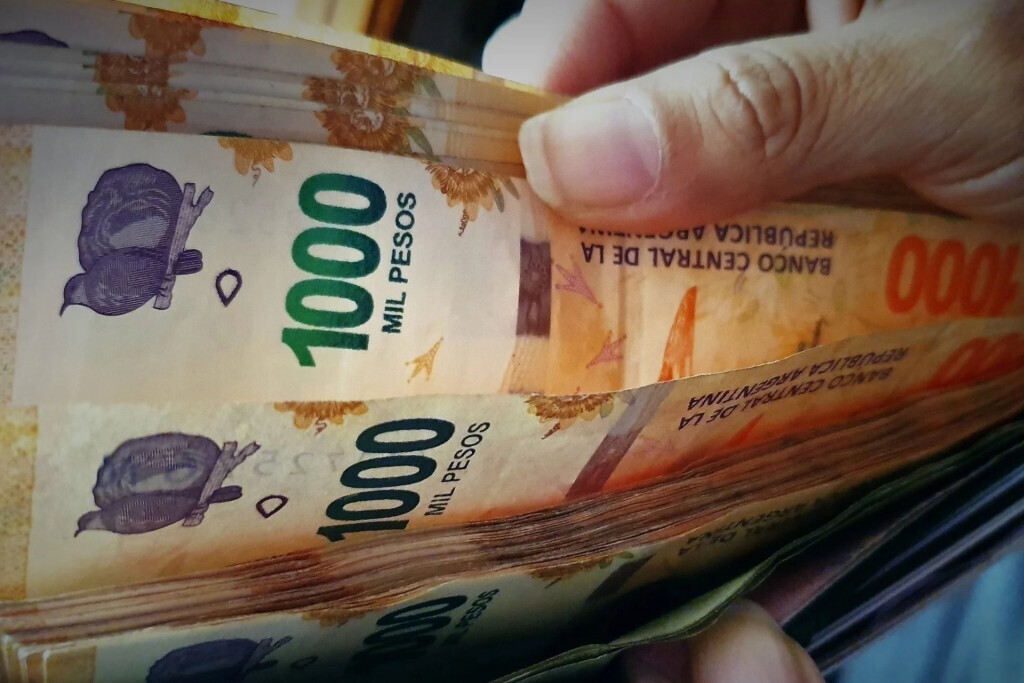
According to a new study, investment in stocks has fallen from 23% to 19%, "which could reflect stock market volatility or a preference for safer options." In the same vein, the purchase of dollars and traditional savings options also decreased. The study specified that the purchase of dollars fell from 16% to 12%, "suggesting a more stable dollar and less urgency to seek refuge in foreign currency, unlike years of high volatility." Digital wallets remained stable at 7%, while fixed-term deposits and stockpiling in supermarkets lost ground (from 3% to 2% and 2% to 1%, respectively), which is likely due to "possibly projected low interest rates for 2026 (around 20.9% annual rate in December 2026, according to the BCRA's REM) and a more controlled inflation that reduces the need to hoard goods." In the country, there are 10,051,200 registered salaried employees who are entitled to receive a bonus, distributed as follows: Private sector: 6,204,300 people; Public sector: 3,406,000 people and Private households: 440,900 people, according to the latest data from the Argentine Integrated Pension System (SIPA). The number of Argentines who will allocate this year's bonus to paying debts has grown significantly compared to the proportion who did so in 2024, according to a survey by the consulting firm Focus Market. The analysis, accessed by the Argentine News Agency (NA), reflected that 29% of those surveyed will use the December bonus to pay off debts, which is 16 percentage points more than in 2024, when 13% of respondents opted for that purpose. In this regard, the consulting firm explained that this is "the most drastic change, which suggests greater household indebtedness or pressures from rising costs in services, food, and daily obligations." In this way, the use of the supplementary salary to settle pending obligations moves to first place among the different priorities of Argentines, when last year it was in fourth place. This change in preference aligns with trends observed in mid-2025 surveys, where 31% of Argentines allocated the June bonus to basic expenses, prioritizing covering needs over enjoyment. From Focus Market, they stated that "in a context of stabilized but insufficient salaries, the bonus acts as a 'lifeline' for the end of the month, especially for the middle class, where 53% resorted to savings or debts in 2025." In this scenario, the director of the consulting firm, Damián Di Pace, stated that "the December 2025 bonus shows a more conservative and defensive orientation compared to 2024, with an emphasis on reducing debts and covering essential expenses, reflecting persistent challenges in purchasing power despite macroeconomic improvements." Regarding this behavior, he warned that "this trend could indicate an incomplete recovery for middle and low-income households, prioritizing stability over asset growth." As a counterpart to the increased use of the bonus to pay off debts, the report showed a decrease in vacations and investments, with a combined drop of 11 percentage points. In this sense, it was pointed out that the decline in vacations (from 26% to 19%) indicates "a lower disposition to spend on leisure, possibly due to a limited December work break or economic uncertainty."